Redesigning secrets scanning to help developers act
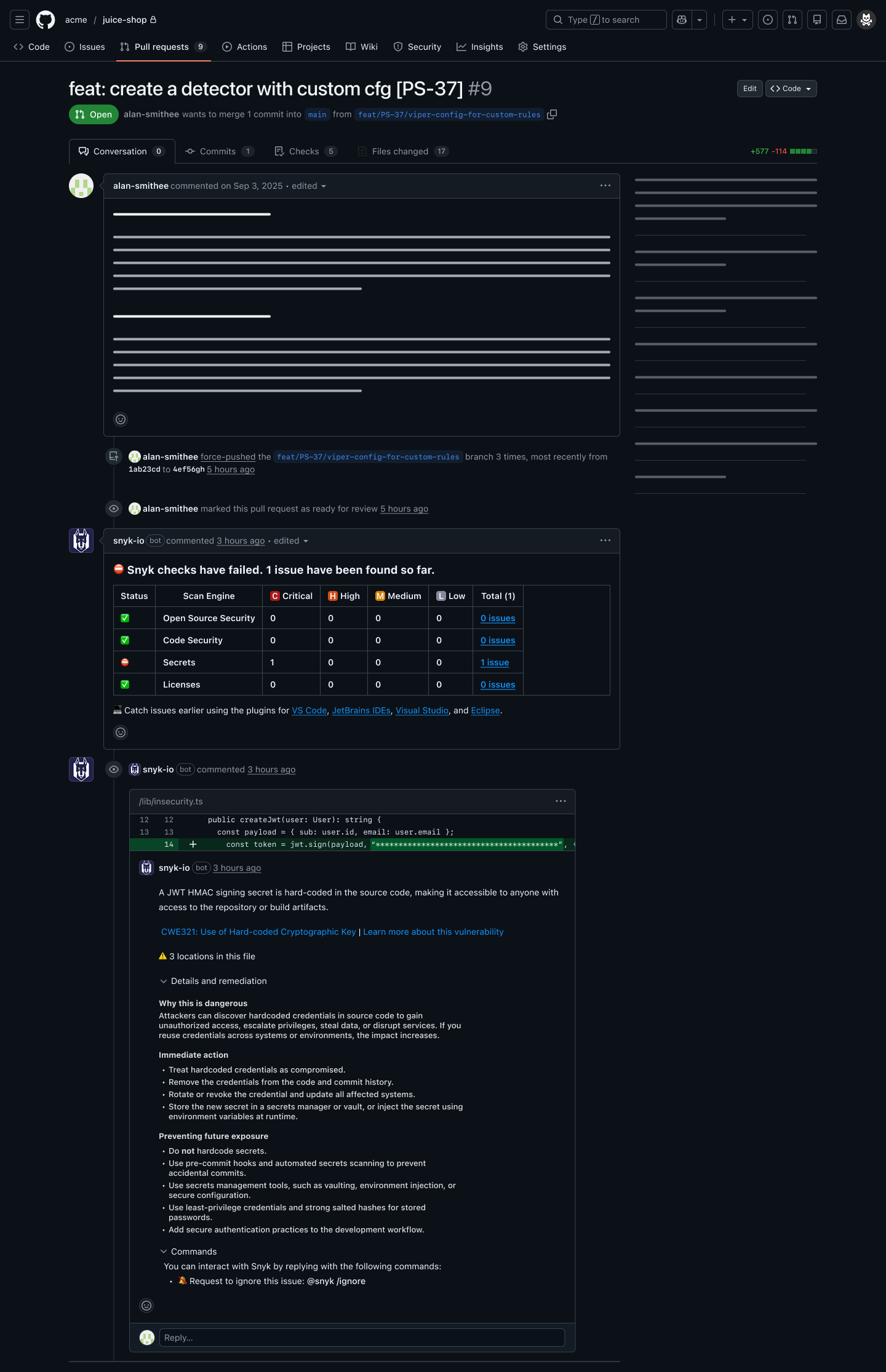
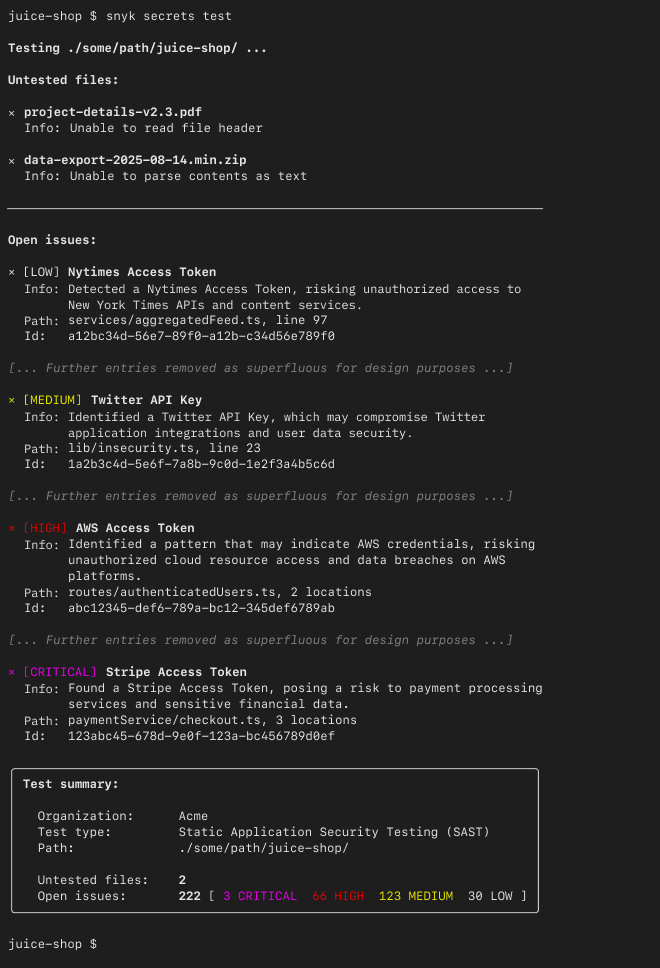
Snyk already detected suspected secrets through its code scanner. Customers reported too many false positives and worried about what it missed.
tl;dr
- My role:
- I led design from competitor research and customer interviews through product modelling, prototypes and detailed hand-off, working closely with the team and stakeholders.
- Problem:
- Customers distrusted Snyk’s existing secrets detection because of false positives and suspected missed findings. Secrets also needed a different remediation model from ordinary code issues.
- Solution:
- A dedicated secrets experience within the familiar workflows, with a customer-informed issue model and fully redacted secret values.
- Outcome:
- Across the first 30 customers, 11,589 detected secrets were no longer present on a subsequent scan — this was almost a 300% increase against the previous solution. And just 0.36% of findings were ignored, which shows an incredible increase in accuracy.
What are secrets?
Imagine leaving copies of your house key around town, each one labelled with your address. Convenient for you — but also convenient for anyone who fancies your Star Wars™ collection.
Software secrets are the digital equivalent: passwords and access keys that let applications into databases, cloud storage and other services. Accidentally leaving them in code can give someone else that same access.
A leaked secret is fixed by “rotating” it: replacing it and invalidating the old one. The equivalent of changing your lock. The bigger hassle is handing out a new key to everyone, who has a legitimate reason for having your house key. In software that means tracking down every piece of code that used the old secret and updating it.
Finding a secret is only the beginning…
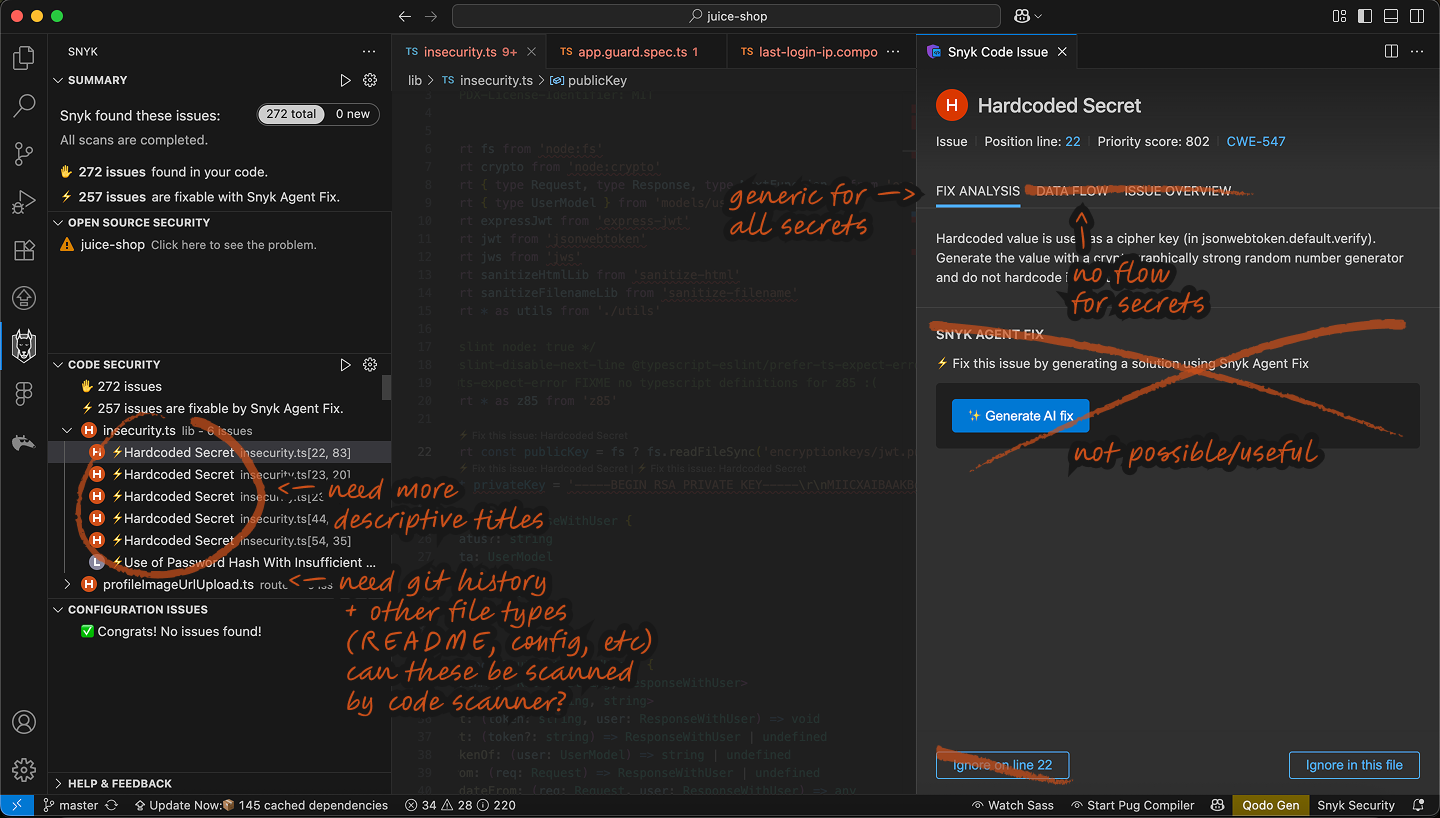
Snyk already detected suspected secrets through its code scanner, but customers reported too many false positives and were worried about what it missed.
I arrived at the kick-off with some basic ideas about what a secrets experience could look like. My new, clever colleagues updated me on the technical details and constraints.
And our customers updated me on the pain points they experienced.
Customers needed control over how secrets were scanned, grouped and handled across teams. My job was to work with them and the team to turn those concerns into a product model: what counts as one issue, who needs to act on it, and what happens when someone ignores it?
New scanner, same workflow
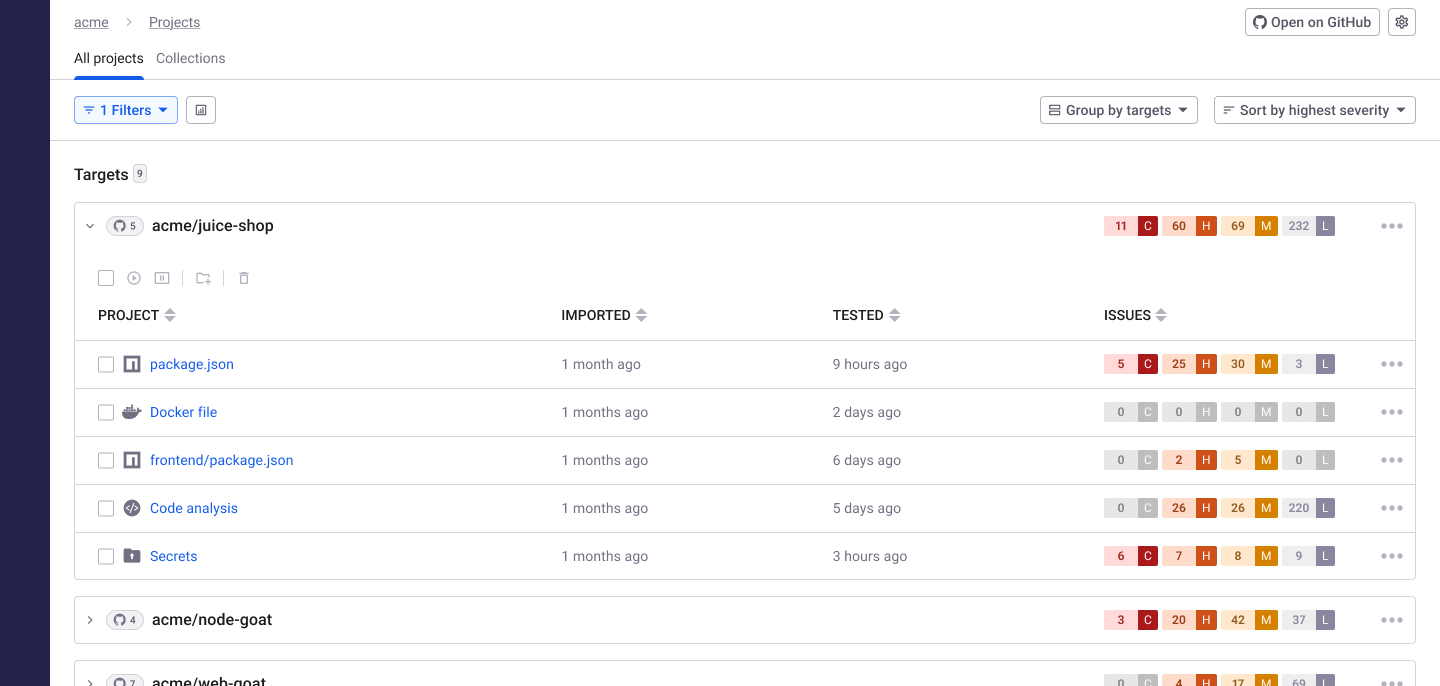
Secrets can appear in configuration files, test files, documentation and other places beyond source code. Customers also wanted different scan schedules, pipeline configurations and remediation deadlines.
So, we separated secrets scanning from code scanning.
We considered building on the planned new architecture, but that would have moved the experience away from the workflows customers already used. Instead, we integrated with the existing application, accepting the legacy constraints to keep the experience familiar.
Defining one issue
If the same password appears ten times, is that ten issues or one?
I initially favoured grouping all occurrences across the codebase into a single issue. It reduced duplication, but customers were worried that ignoring it in the entire codebase — across team ownership — might accidentally ignore real secrets.
So, working with application security teams and developers, we settled on:
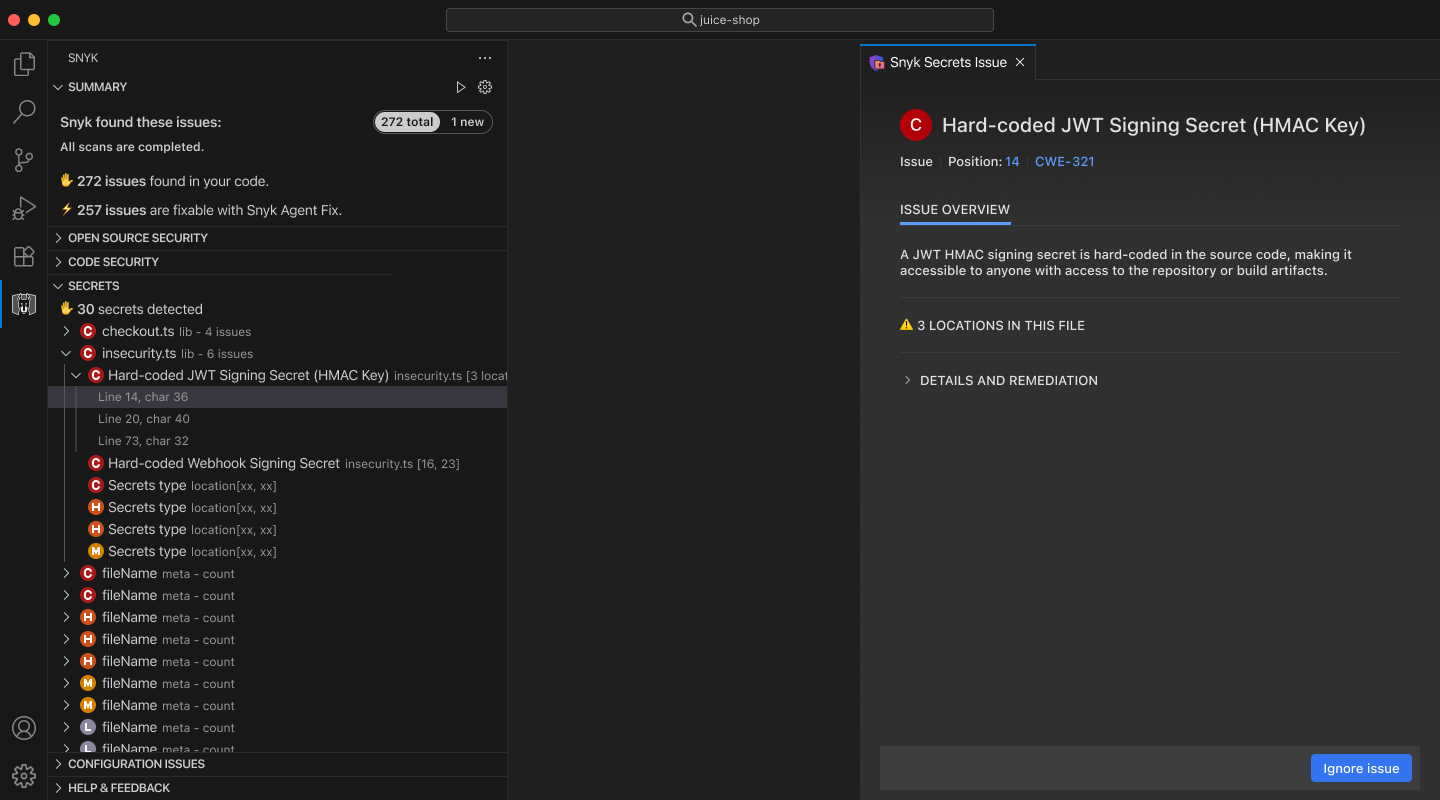
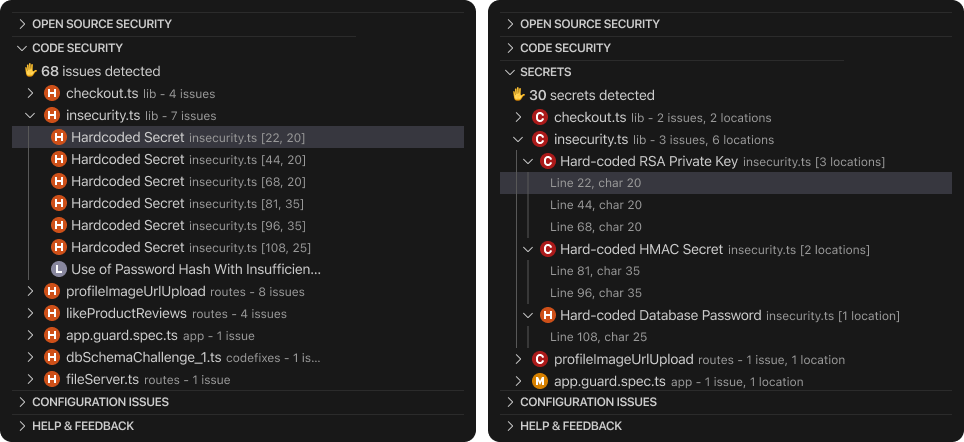
One issue = all occurrences of a particular secret within one file.
This kept issues well within team ownership without being too granular to overwhelm them with issues. Customer concerns changed the model, and the model then shaped the interface.
I represented findings as a hierarchy of file > secret issue > locations. Even when a secret appeared dozens of times, every location remained available. A tidy screen should not disguise the amount of work left to do.
Showing context without exposing the secret
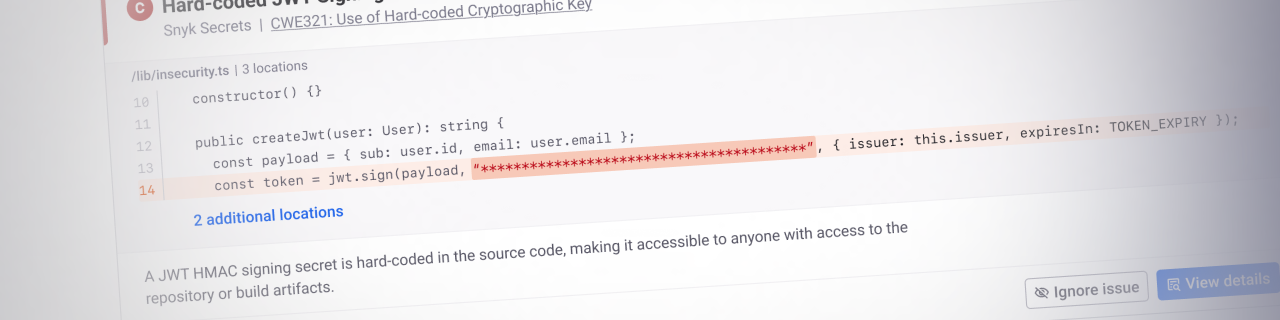
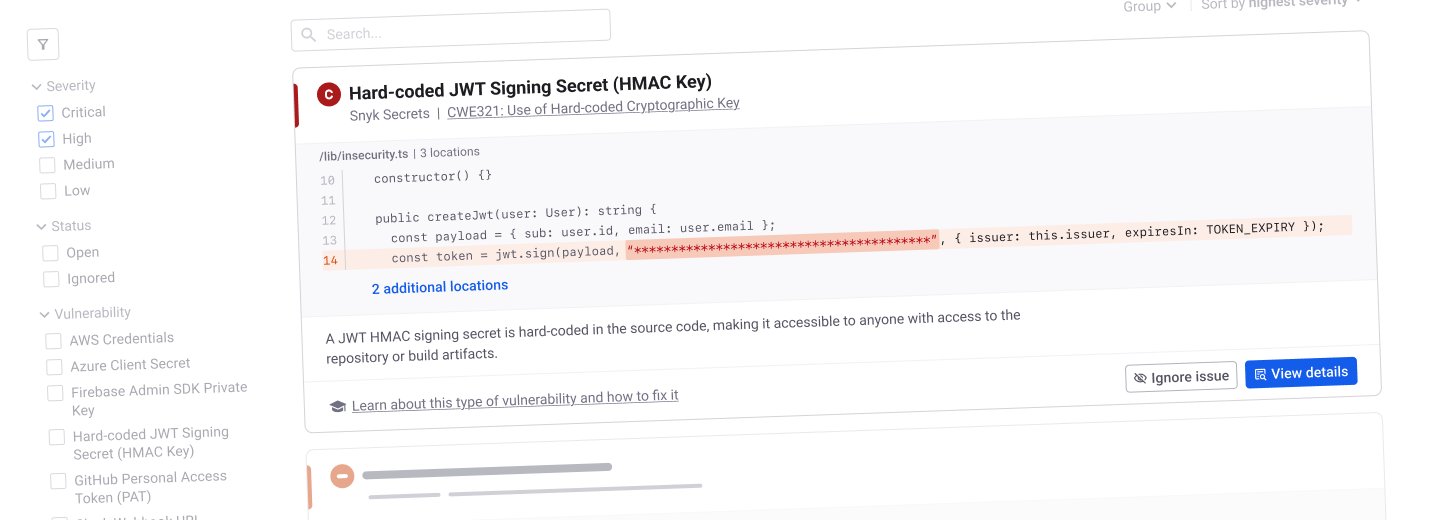
Developers needed the context of the surrounding code to understand a finding, but customers were uncomfortable seeing secret values displayed in the interface.
We explored partial masking, but different secret formats made it difficult to define a consistent rule that would always conceal enough.
We chose to redact the whole value while retaining the surrounding code context. This addressed customers’ concerns and avoided exposing sensitive portions of unfamiliar secret formats.
Outcomes
Across the first 30 customers, the new scanner detected 294,596 secrets across 11,565 repositories. Of these findings, 11,589 (3.93%) were no longer present on a subsequent scan, while 1,072 (0.36%) were ignored.
This was almost a 300% fix rate increase against the previous solution. And the low level of ignored findings shows an incredible increase in accuracy.
It has to be mentioned that "fixed" means that the secret had been removed from the code before the next scan. We cannot confirm whether the secret has actually been rotated or invalidated until we can integrate with customers‘ vaults (which is a later feature).
These results reflect the combined scanner and product experience. My contribution was to make findings understandable and actionable through a customer-informed issue model, familiar workflows and clear presentation.
The most consequential design decision happened before the screens: agreeing what a secrets issue actually was.
Further reading
Some mock-ups and screenshots from the project